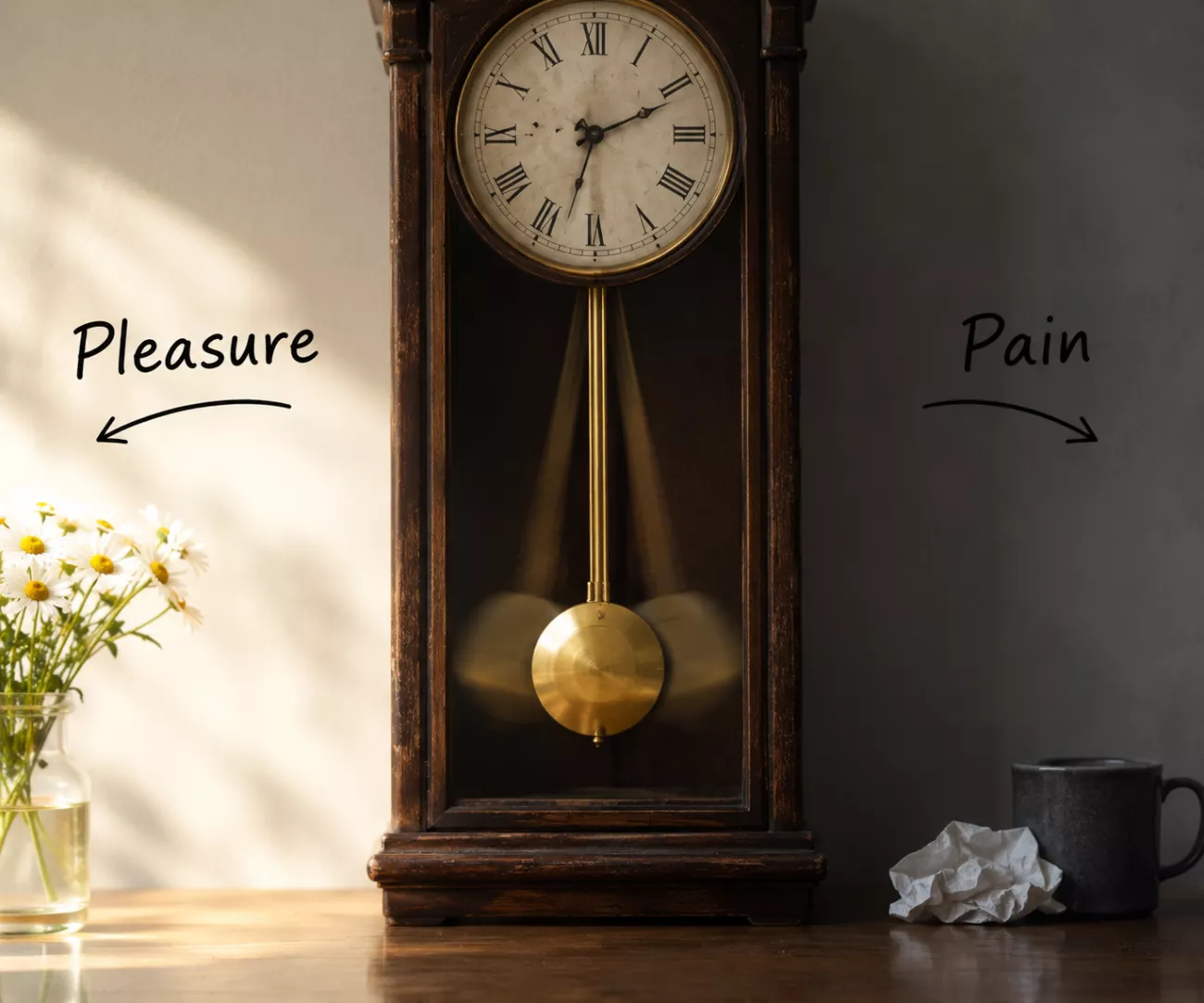
Have you ever watched an old pendulum clock? Left. Right. Left. Right. It never rests on one side. The moment it reaches one end, it is already on its way back.
That is exactly how we live.
We swing towards pleasure and run away from pain. Towards love, away from hate. Towards success, away from failure. Every plan, every saving, every relationship we hold on to — is an attempt to stay on the "good" side of the swing.
But has anyone ever managed to stay there?
The new phone thrills us for a week — then one small scratch on its screen hurts more than it should. The child we longed for brings joy, and along with it, a lifetime of worry. The promotion is celebrated for one evening, then come the targets and the fear of falling. The deeper the love, the deeper the grief when it goes.
Pleasure does not just come before pain. The pleasure we cling to gives birth to pain. And pain sends us running after pleasure again.
So we keep swinging. Board exams, then a job, then marriage, then a house, then the children's admissions. Each "once this happens, I'll be happy" quietly turns into the next one.
And one day, the pendulum stops.
Stand at a cremation ground during an antyesti (funeral) and you will feel it. A man who was worried about his EMI and his neighbour's opinion just last week is now a handful of ash. For a few minutes, everyone there asks the same silent question — what was it all for? Then we go home, take a bath, check our phones, and forget.
If we are born only to swing until we stop, then what is the point?
Perhaps the problem is not with life, but with the way we are looking at it.
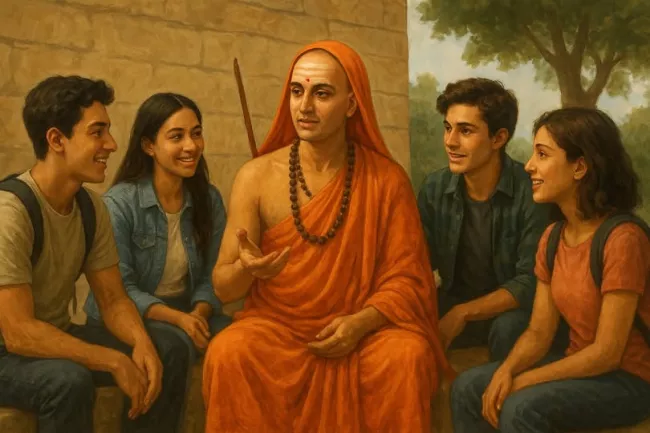
What if life is not a race, but a classroom?
Then nothing is wasted. The rude boss teaches patience. The friend who betrayed us teaches us about expectation. The illness teaches us how precious an ordinary, pain-free morning is. The tree that gives shade even to the one cutting it, the mountain that stays still through every storm, the river that never clings — each one is a teacher, if only we look.
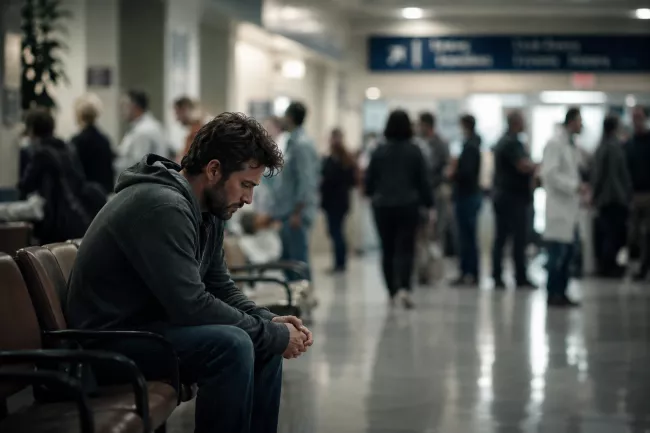
And suffering teaches the most. Nobody sits up at 2 am asking "Who am I?" after a party. We ask it after a loss, a failure, a night in a hospital corridor. Like gold in a goldsmith's fire, only the impurities burn. The fire doesn’t destroy the gold; it frees it. Pain burns away our pride, our mask, and the things we thought mattered, and what remains is who we truly are.
But what is this teacher really teaching? Good marks? A good job? More money?
At first, it seems so. Then why does the one who has "sorted out everything" still sit on the balcony on a Sunday evening, cup of tea in hand, feeling a hollowness he cannot name — is this it?
That emptiness is not a fault. It is the teacher tapping on our shoulder. You have learnt the lower lessons. Now look higher. The whole syllabus has been slowly turning us around — from "how do I become happy?" to "who is it that wants to be happy?"
The syllabus is not the same for everyone. Neither is the pace. Siddhartha saw an old man, a sick man and a dead body — and that was enough. Some of us need the same heartbreak three times before we see the pattern. Life simply repeats the class until the lesson is learnt.
Some walk on gravel. Some go by car. Some walk carrying a heavy load of grudges, regrets and ego. And a few, having dropped the load, simply fly.
The roads are different. The destination is the same.
And this is where the pause comes in.
Not the final pause at the cremation ground — a living one. Between one swing and the next, there is a moment of stillness. The moment you notice anger rising, before you speak. The moment joy arrives, before you start fearing its loss. In that gap, you are no longer the pendulum. You are the one watching it swing.
And the one who watches was never swinging. That is the intimate truth every lesson has been pointing to.
The pendulum will keep swinging — that we cannot change. But we can learn to pause. The next time that empty feeling visits, don't rush to fill it with your phone, a plan or a purchase. Sit with it for five minutes. Just watch. And the next time pain knocks, ask not "why me?" but "what is this here to teach me?"
The classroom is always open. The teacher has been waiting.
The only question is — are we ready to learn?
Comments
No comments yet. Be the first to share a thought.
Leave a comment
No email needed. Comments appear after a quick review.